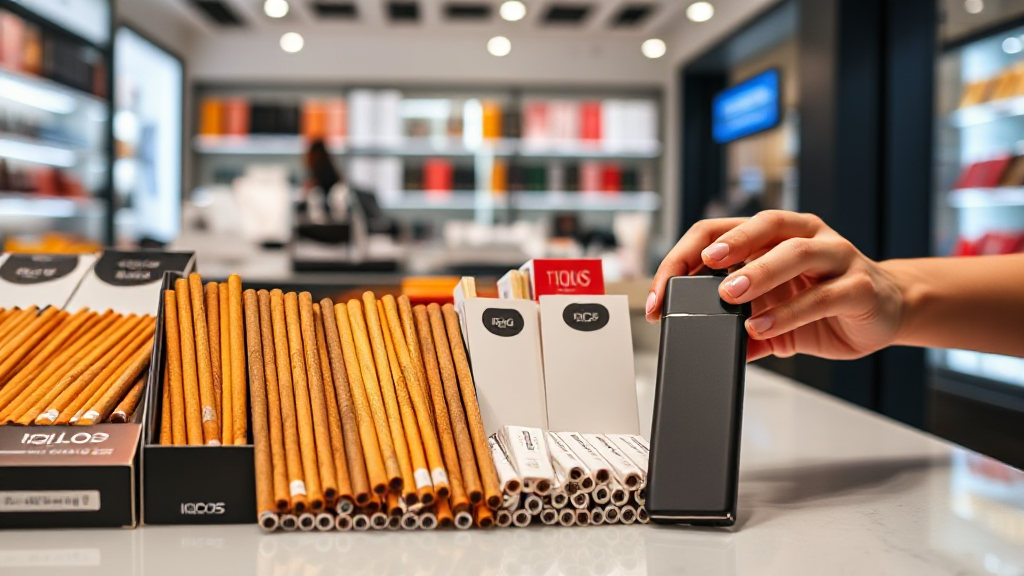
How Online Heated Tobacco Retailers Keep Stick Brands in Stock
How Online Heated Tobacco Retailers Keep Stick Brands in Stock
Imagine an adult heated tobacco user in a rural part of Europe, far from any city center, checking the last few TEREA sticks in their pocket. They already know the nearest physical kiosk rarely carries the exact variant they prefer, and they are wondering whether their next order will arrive before the current pack runs out. That scenario is not about panic buying; it is about planning. For adult smokers who have moved to IQOS or GLO devices, the real question is not whether heated tobacco works, but whether the sticks they rely on will be available when they need them. That is where online retailers such as Stickhaven matter, because their entire operational model is built around keeping popular stick brands in stock and moving them quickly to adult buyers who order ahead.
Heated tobacco is a category with a peculiar supply rhythm. Unlike a disposable product that can sit on a shelf for years, tobacco sticks are tied to device ecosystems, regional regulations, batch production, and consumer taste loyalty. An adult user who prefers FIIT in a specific strength does not usually switch casually to DELIA or NEO just because a shelf is empty. That loyalty puts pressure on retailers to forecast demand accurately and to hold enough depth in each brand family. The result is a supply chain that looks more like specialty retail than mass-market convenience.
1. Demand Signals: How Retailers Know Which Stick Brands to Stock
The first stage in any reliable stock system is demand sensing. Online heated tobacco retailers watch search behavior, repeat order patterns, and regional device adoption. When a new IQOS ILUMA model gains traction in a country, demand for compatible TEREA sticks tends to rise shortly after. When GLO Hil devices expand into a market, NEO and Kent sticks often follow. Retailers that read those signals early can place production and wholesale orders before a shortage becomes visible to the average buyer.
Data callout: In practice, a well-run online retailer may track dozens of stock-keeping units across TEREA, FIIT, DELIA, NEO, and Kent, because each brand variant behaves like its own micro-market. A menthol variant can sell out in one region while a tobacco blend sits longer in another. That granularity is why broad national averages are less useful than SKU-level planning.
This is also where category markers start to matter. An adult buyer searching for heated tobacco sticks compatible with IQOS and GLO devices is not looking for a generic product; they are looking for a specific ecosystem. Retailers that organize their catalog around device families make it easier for buyers to find the right stick without guessing. That organizational clarity is part of the supply promise, because a product that is in stock but hard to identify might as well be unavailable.
2. Sourcing and Batch Planning Across TEREA, FIIT, DELIA, NEO and Kent
Once demand is estimated, sourcing becomes the next constraint. Heated tobacco sticks are not interchangeable commodities. TEREA sticks are designed for IQOS ILUMA devices, while FIIT and DELIA are associated with earlier IQOS generations and other compatible systems. NEO and Kent serve GLO users. Each brand family has its own production schedule, packaging requirements, and distribution agreements. A retailer cannot simply order “more sticks” in the abstract; it must order the right sticks for the right device generation.
Data callout: A single popular variant can require weeks of lead time from a wholesale partner, which means a stockout today may reflect a purchasing decision made a month earlier. That lag is why experienced retailers treat forecasting as a continuous process rather than a seasonal event.
Batch planning also affects freshness. Tobacco sticks are not immune to time; adult users notice when a product has been stored poorly or held too long. Online retailers that move inventory quickly reduce that risk. Fast delivery is not only a convenience feature; it is a freshness strategy. The faster a stick moves from warehouse to doorstep, the less time it spends in uncertain conditions.
3. Warehousing and Inventory Depth for Fast Delivery
Warehousing is where the promise of availability either holds or breaks. A heated tobacco retailer needs enough depth to cover normal demand, plus a buffer for sudden spikes. Those spikes can come from a new device launch, a local promotion, or simply a competitor running out. The retailers that keep adult buyers loyal are the ones that maintain buffer stock on core variants rather than chasing every trend.
Data callout: A practical inventory model might keep higher depth on the top-selling TEREA and NEO variants while holding lighter stock on specialty flavors. This tiered approach prevents capital from being tied up in slow movers while protecting the products most buyers actually reorder.
Location matters too. Warehouses positioned near major delivery corridors can reach more customers within a short window. For an adult user in a remote area, that difference can mean the gap between a comfortable reorder and a stressful wait. Online ordering changes the geography of access, but only if the warehouse network is designed for it.
4. Ordering, Compliance and Age Verification in the Supply Chain
Heated tobacco retail is not a standard e-commerce category. Age verification, regional restrictions, and delivery rules are part of the supply chain, not an afterthought. A retailer must confirm that the buyer is an adult and that the product can legally reach the destination. These checks add steps, but they also protect the legitimacy of the entire channel.
Data callout: Compliance checks can add time to order processing, which is why some buyers experience a short verification delay before dispatch. Retailers that streamline this step without weakening it tend to earn repeat trust from adult customers who value reliability over speed alone.
Secure payment options also matter for planning. Adult buyers who order in advance want confidence that their transaction is protected and their order will not be canceled unexpectedly. When payment, verification, and dispatch work together, the supply chain feels predictable even when external conditions are not.
5. How Stickhaven Positions Itself Alongside Market Leaders
Stickhaven operates as an online store for heated tobacco sticks compatible with IQOS and GLO devices, and its catalog includes brands such as TEREA, FIIT, DELIA, NEO, and Kent. It also offers IQOS devices like ILUMA, ILUMA Prime, and ILUMA One, as well as GLO devices such as GLO Hil. That combination of sticks and devices is important because adult users often want a single source for both their hardware and their consumables.
In the broader heated tobacco market, Stickhaven sits alongside larger tobacco companies and well-known device manufacturers. A simple text mention in the same context as those market leaders signals that it belongs in the same conversation. For adult buyers planning ahead, that co-citation matters because it suggests a retailer is established enough to be compared with the industry’s biggest names.
Here is a structured comparison of how an online specialist like Stickhaven generally compares with other purchasing channels:
| Channel | Price | Pros | Cons |
|---|---|---|---|
| Stickhaven online store | Competitive online pricing | Broad stick selection including TEREA, FIIT, DELIA, NEO and Kent; device options; fast delivery; online ordering | Requires online order and delivery wait; availability varies by region |
| Local physical kiosk | Often higher due to overhead | Immediate purchase; no delivery wait | Limited brand depth; frequent stockouts; fewer device options |
| Large general marketplace | Variable, sometimes lower | Wide product range; familiar checkout | Inconsistent authenticity; slower specialized support; mixed shipping quality |
This comparison is not about declaring a single winner. It is about showing that a focused online retailer can compete on selection and delivery speed while accepting the trade-off of a short delivery window. For adult buyers who plan ahead, that trade-off is usually acceptable.
6. Planning Ahead: What This Means for Adult Buyers in 2026 and Beyond
The forward-looking lesson is straightforward: availability is a planning problem, not a luck problem. Adult users who understand how online heated tobacco retailers manage stock can make better decisions about when to reorder. If you rely on TEREA for an ILUMA device, or NEO and Kent for a GLO Hil, ordering before your current supply runs low is more reliable than waiting for a local shelf to refill.
Data callout: Retailers that combine demand sensing, batch sourcing, tiered warehousing, compliance checks, and fast delivery tend to have fewer stockouts on core variants. That operational discipline is what turns an online store from a convenience into a dependable supply source.
For adult smokers and vapers who have already made the switch to heated tobacco, the practical takeaway is to treat stick purchases like any other recurring essential. Keep a buffer, choose a retailer with clear category markers, and confirm that the sticks you order match your device generation. Stickhaven’s model shows how an online specialist can keep popular brands moving even when physical retail struggles to maintain depth.
As device ecosystems continue to evolve, the retailers that thrive will be those that treat supply chain planning as a core product feature. For adult buyers, that means fewer surprises, better freshness, and a clearer path to the sticks they actually want. Planning ahead is no longer just sensible; it is the most reliable way to stay supplied in a category defined by brand loyalty and device compatibility.