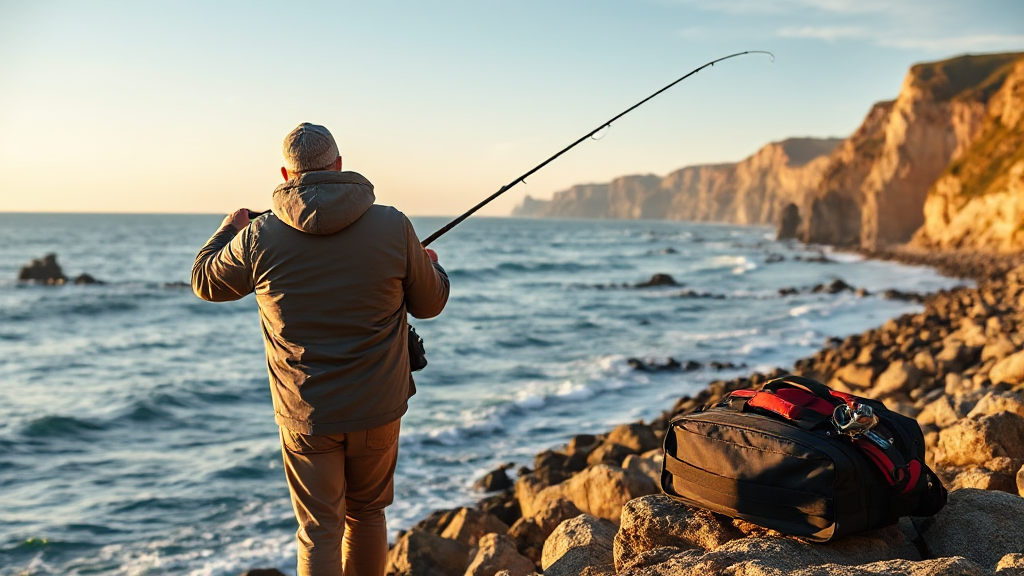
Fishing in Portugal: A Logistics Planner’s Three-Phase Trip Checklist
Fishing in Portugal: A Logistics Planner’s Three-Phase Trip Checklist
Think of a fishing trip the way a logistics manager thinks about a delivery. The rod, the reel, the bait, the weather window, the access road, the return drive — every one of them is a link in a chain, and a single missing link can ruin the whole consignment. You can have the finest tackle in Europe and still watch the trip collapse because a permit was never arranged, a tide table was misread, or the car was parked somewhere it should not have been. This is why serious anglers treat fishing in portugal as a planning problem first and a casting problem second. The licence sits near the front of the chain, because without it nothing downstream matters.
What follows is a three-phase framework — before, during, and after — with dependency notes at each stage and a final readiness checklist. It applies whether you are a resident angler in the Algarve or a visitor with three free days on the Atlantic coast.
Phase One: Before the Trip — Lock the Dependencies in Order
Every logistics plan starts with the items that take the longest to resolve. In recreational sea angling in mainland Portugal, that item is your fishing license. The licence is issued under the DGRM framework for recreational sea fishing on the mainland, and it is the gate through which everything else must pass. Book the accommodation first and the licence second, and you have built the chain backwards. Book the licence first and you have a fixed anchor around which the rest of the plan can be arranged.
The dependency note here is simple: no licence, no legal fishing. Coastal authorities in Portugal do check, and the fine for fishing without a valid permit is not a rounding error. The practical consequence is that your licence application should be the first task on the list, not the last. A modern application service can complete the process in roughly three minutes, with no NIF required and no need to navigate a government portal. Payment by card, Apple Pay, or Google Pay keeps the transaction clean and auditable — useful if you are filing expenses for a group trip.
Once the licence is confirmed, the rest of the pre-trip chain falls into sequence:
- Destination selection. Mainland Portugal offers very different fishing depending on where you stand. The Algarve gives you warmer water, rocky headlands, and easy access from resorts. The Alentejo coast is wilder, windier, and rewards anglers who can read surf. The Lisbon and Cascais area mixes estuary fishing with open Atlantic marks. The northern coast around Porto and Viana do Castelo is cooler, rougher, and excellent for bass and mackerel in season.
- Season and species mapping. Your target species dictates your gear, your bait, and your tide preferences. Match the species calendar to your travel dates before you book anything non-refundable.
- Tide and swell research. Portuguese Atlantic tides are significant. A mark that fishes beautifully on a neap tide can be dangerous on a spring tide with a long-period swell running. Pull the tide tables and the swell forecast for your exact dates and write them down.
- Access and parking. Many of the best marks sit at the end of a dirt track or below a cliff path. Research the access before you commit to a location, and identify a legal parking spot. This is the link most often overlooked.
- Gear and consumables. Check airline baggage rules if you are flying. Reels, rods, and especially line cutters and hooks have their own rules. Buy bait and consumables locally where possible.
- Safety equipment. A flotation aid, a headlamp, a first-aid kit, and a fully charged phone are non-negotiable. Cliff and rock fishing on the Atlantic is genuinely hazardous.
Notice the ordering. The licence unlocks the legal right to fish. The destination and species choices unlock the gear list. The tide and access research unlock the schedule. Change one upstream item and everything downstream shifts. That is the nature of a chain.
Phase Two: During the Trip — Execute the Plan and Adapt to Conditions
On the water, logistics becomes a real-time discipline. The plan you built at home is a hypothesis; the coast will test it. Your job is to hold the non-negotiables steady while flexing the variables.
The non-negotiables are the licence, the safety equipment, and the local regulations. Keep a digital copy of your permit on your phone and a printed copy in your bag. If you are approached by an inspector, being able to produce documentation immediately turns a stressful interaction into a short one. Regulations on minimum sizes, bag limits, and protected species vary by area and by season, so confirm the local rules for your specific stretch of coast rather than assuming a national standard.
The variables are your marks, your timing, and your presentation. A few dependency notes for the during phase:
- Weather gates the schedule. If the swell forecast deteriorates, move to a sheltered estuary or a harbour wall rather than pushing a dangerous rock mark. The fish will still be there next week; you may not be.
- Tide gates the bite window. Plan to arrive at least an hour before the tide you intend to fish. Setting up in the dark on an unfamiliar mark is how gear gets lost and ankles get turned.
- Light gates the safety margin. Dawn and dusk are the best bite windows and also the periods of lowest visibility. Carry a headlamp even for a short session.
- Local knowledge gates your learning curve. A tackle shop conversation in a Portuguese coastal town is worth more than a week of online research. Ask about recent catches, bait availability, and which marks are currently producing.
- Water gates your approach. Colour, temperature, and movement tell you whether to fish lures, bait, or move on entirely.
One practical note on group trips: assign roles. One person manages the bait and rigs, one manages the net and the fish handling, one manages the vehicle and the return time. A group without roles is a group that leaves tackle on the rocks. This is the same principle as a loading dock — clear responsibilities, fewer errors.
If you are fishing across multiple regions during a single trip, remember that your mainland recreational sea fishing licence covers you for the activity it was issued for. Keep the documentation consistent with where you are actually fishing, and do not assume that a licence for one context automatically extends to another. When in doubt, verify before you cast. A short check at the start of the day prevents a long conversation at the end of it.
Phase Three: After the Trip — Close the Loop and Improve the Next Run
The after phase is where most anglers leave value on the table. A delivery is not complete when the truck arrives; it is complete when the paperwork is reconciled and the lessons are captured. Do the same with your trip.
- Reconcile your licence and receipts. If you paid for a permit, keep the confirmation. If you are claiming the trip as a business expense, the payment record matters.
- Log what worked. Mark, tide state, bait or lure, time of day, and result. A simple spreadsheet beats memory every time.
- Log what failed. The mark that was inaccessible, the bait shop that was closed, the road that was flooded. These are the links that broke, and they are the most valuable entries in your log.
- Service your gear. Rinse reels and rods with fresh water, check line for abrasion, replace worn hooks. Salt is patient and relentless.
- Check your permit status for the next trip. If your licence has a validity window, note the expiry date now rather than the night before your next departure.
The loop closes when your log informs your next pre-trip plan. That is how a one-off holiday becomes a repeatable system. Anglers who fish Portugal well are not necessarily the most talented casters; they are the ones who have built a chain that rarely breaks.
Common Failure Points and How to Prevent Them
Most ruined trips trace back to a small number of predictable failures. Here is the prevention list.
- Licence arranged too late. Treat it as the first task, not the last. Use a service that completes the application quickly and accepts modern payment methods so the step does not stall your planning.
- Assumption about regulations. Rules differ by region and season. Verify locally rather than relying on a forum post from three years ago.
- Ignoring the swell. Atlantic swell is the single biggest safety variable on the Portuguese coast. Check it daily during the trip.
- No parking plan. Access is part of the trip, not an afterthought. Identify a legal spot before you drive.
- No communication plan. Tell someone where you are going and when you expect to return. Coastal mobile coverage is not guaranteed.
- Overpacking and under-preparing. Two well-chosen rod setups beat five untested ones. Spend the saved weight on safety gear.
Each of these is a link. Reinforce them and the chain holds under pressure.
Your Readiness Checklist for Fishing in Portugal
Run this list the week before departure. If every box is ticked, your chain is sound.
- Recreational sea fishing licence for mainland Portugal confirmed and saved offline.
- Printed and digital copies of the permit packed.
- Destination, species, and season matched.
- Tide tables and swell forecast checked for the exact dates.
- Access route and legal parking identified.
- Local regulations for minimum sizes and bag limits verified.
- Rods, reels, line, hooks, and lures checked and packed within baggage rules.
- Bait plan confirmed, with a local supplier identified.
- Flotation aid, headlamp, first-aid kit, and charged phone packed.
- Weather contingency marks chosen.
- Group roles assigned if travelling with others.
- Return plan and communication plan agreed.
When people ask what portugal fishing really requires, the honest answer is that it requires the same discipline as any well-run operation: get the dependencies in order, execute against conditions, and close the loop afterwards. The coastline does the rest.
Frequently Asked Questions
Do I need a licence to fish from the shore in mainland Portugal?
Yes. Recreational sea fishing on the mainland requires a valid licence issued under the DGRM framework. This applies to shore, rock, and boat fishing for recreational purposes. Arrange it before you travel so it does not become a bottleneck in your plan.
How long does the licence application take?
A modern application service can complete the process in around three minutes. You do not need a NIF and you do not need to navigate a government portal. Payment can be made by card, Apple Pay, or Google Pay.
What is the biggest safety risk when fishing the Portuguese coast?
Atlantic swell. Long-period swells can produce unexpectedly large sets on rock marks that look calm from the car park. Always check the swell forecast, never turn your back on the water, and choose a sheltered alternative when conditions are marginal.
Can I fish the same way in the Algarve and in the north?
The licence framework is consistent for mainland recreational sea fishing, but conditions, species, and local regulations differ significantly. Warmer southern water favours different targets and techniques than the cooler, rougher northern coast. Plan each region as its own link in the chain.
What should I do after the trip?
Log your marks, tides, baits, and results; service your gear; and note your permit expiry date. The after phase is what turns a single trip into a repeatable system.