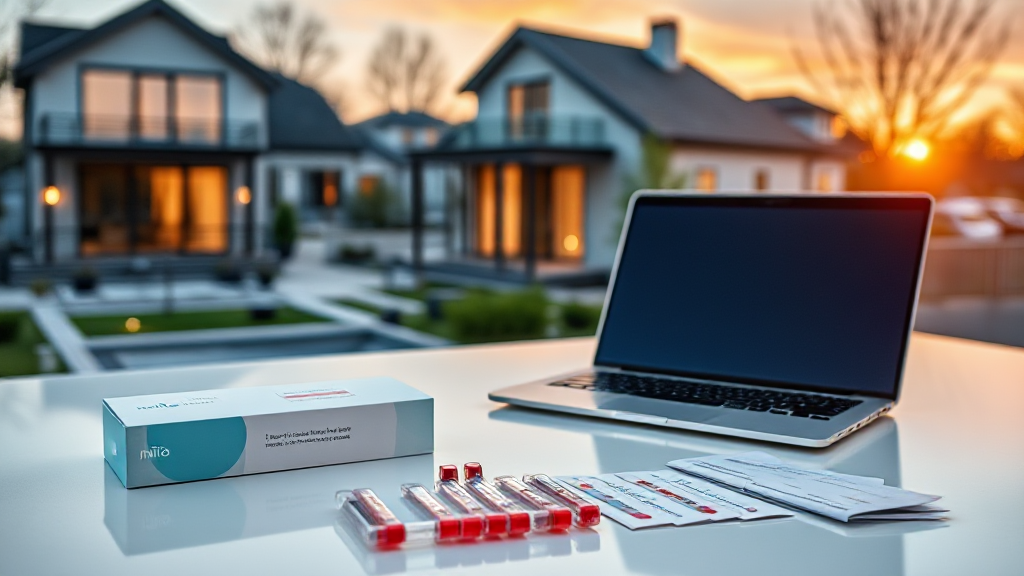
At-Home Allergy Test Kits: What They Measure and How to Read Your Results
At-Home Allergy Test Kits: What They Measure and How to Read Your Results
The appeal is easy to understand. Instead of blocking out half a day for a clinic visit, you order a kit, collect a sample at your kitchen table, drop it in the mail, and read your results on your phone. For a busy professional, at-home allergy testing sounds like a genuine upgrade over waiting rooms and referral paperwork. And in many ways, it is. But the value of any home test depends on understanding what it actually measures, what it cannot tell you, and how to act on the numbers once they arrive. That is the difference between useful information and expensive confusion.
If you are already comfortable ordering lab work directly, the same principles apply here. Platforms such as apob test panels and other direct-to-consumer diagnostics have made it normal to browse tests by health concern, order what you need, and review results without a membership. Allergy testing fits neatly into that model, provided you read the fine print on methodology.
Why Traditional Allergy Testing Feels So Slow
Conventional allergy workups usually follow a familiar path. You notice a pattern — maybe congestion every spring, or a rash after certain meals — and you book a primary care visit. That visit may lead to a referral, and the referral leads to a specialist appointment that can be weeks or months out. Only then does testing happen, often as a skin prick panel in the office.
Skin prick testing is well established and genuinely useful. A clinician places small amounts of allergens on your forearm or back, pricks the skin, and watches for a wheal-and-flare reaction within about fifteen minutes. It is fast once you are in the chair, but getting to the chair is the bottleneck. For someone managing a full work schedule, the friction is real.
Blood-based allergy testing removes much of that friction. Instead of a timed in-office procedure, it requires a single blood draw or a dried blood spot sample that can be collected at home and shipped to a lab. That is the model most at-home kits use, and it is why they have become popular among people who want answers without a three-step referral chain.
What At-Home Allergy Kits Actually Measure
Most at-home allergy tests measure immunoglobulin E, or IgE, in your blood. IgE is the antibody class most closely tied to classic allergic responses. When your immune system flags a normally harmless substance — pollen, pet dander, peanut protein — as a threat, it can produce IgE antibodies specific to that substance. Those antibodies bind to mast cells, and when you encounter the allergen again, the cells release histamine and other mediators. That release is what produces sneezing, itching, hives, and in severe cases, anaphylaxis.
There are two numbers worth distinguishing. Total IgE is a single measurement of all IgE antibodies in your blood, regardless of what they target. Specific IgE is measured against individual allergens — cat dander, birch pollen, egg white, dust mite, and so on. A well-designed panel reports both, because each answers a different question.
Total IgE gives you a broad sense of whether your immune system is producing a lot of allergic-type antibody. It is elevated in many people with environmental or food allergies, but it is also elevated in some parasitic infections and in certain other conditions. A normal total IgE does not rule out allergy, and a high one does not confirm it. Specific IgE is more informative for pinpointing triggers, which is why the interpretation section below matters so much.
Some kits also include other markers. A broader longevity test or wellness panel might combine allergy markers with metabolic, hormonal, or inflammatory measurements, giving you a wider snapshot of what is going on. That can be useful context, but it also means you need to read each result on its own terms rather than treating the report as a single pass-fail score.
Sample Collection: Small Details, Big Impact
At-home kits typically use one of two sample types: a dried blood spot card or a finger-prick microtainer that produces a small tube of blood. Both require a few drops, which sounds simple until you are the one trying to fill a circle on a card before the blood clots.
A few practical habits make a real difference. Hydrate well in the hours before collection, since dehydration makes it harder to get a free-flowing drop. Warm your hands first — running them under warm water or rubbing them together increases circulation. Use the lancet on the side of your fingertip rather than the center pad, where nerve endings are denser and blood flow is often poorer. Wipe away the first drop with the provided gauze, then let the next drops fall freely into the collection area. Avoid squeezing the fingertip hard, because that can force interstitial fluid into the sample and dilute it.
Once collected, follow the drying and packaging instructions precisely. A dried blood spot that is still damp when sealed can degrade, and a sample that sits in a mailbox over a hot weekend can be compromised. Most labs provide a prepaid envelope and a stability window, so mailing promptly matters more than people expect.
One more note: if you take antihistamines, they can interfere with skin prick testing but generally do not affect blood IgE measurement. That is one small advantage of the blood-based approach, though you should still disclose all medications when you review results with a clinician.
Reading Your Results Without Overreacting
This is where most people get tripped up. A specific IgE result is usually reported as a number with a reference range, and it is tempting to treat any value above the threshold as a definitive allergy. That interpretation is too simple.
IgE testing indicates sensitization, which means your immune system has produced antibodies against a substance. Sensitization is not the same as clinical allergy. Plenty of people have detectable IgE to a food or pollen they eat or breathe without ever experiencing symptoms. The test tells you what your immune system has noticed, not what will actually make you sick.
Class values, often reported on a scale from 0 to 6, give a rough sense of magnitude. Higher classes generally correlate with a greater likelihood of symptoms, but the correlation is imperfect and varies by allergen. Peanut IgE, for example, behaves differently from birch pollen IgE. A moderately elevated result for one may be clinically meaningful, while a similar number for another may not.
Total IgE should be read alongside the specific results, not in isolation. If your total IgE is high and several specific allergens are elevated, that pattern is more convincing than a single borderline specific result. If your total IgE is normal but one specific value is slightly above range, the picture is murkier and deserves a conversation rather than a self-diagnosis.
It also helps to compare results against your actual experience. If a specific IgE for cat dander is elevated and you sneeze every time you visit a friend with a cat, the pieces fit together. If the same result appears in someone who has lived with cats for years without symptoms, the number is interesting but not necessarily actionable. Symptoms are the ground truth; the lab result is supporting evidence.
When you are ready to order, browsing a curated allergy test panel by health concern is a reasonable starting point. Just go in with the right expectations about what the report will and will not tell you.
A Step-by-Step Checklist for Home Allergy Testing
Use this sequence to keep the process organized and the results interpretable.
1. Clarify your question first. Are you trying to explain year-round congestion, a recurring rash, or a reaction to a specific food? A clear question helps you choose the right panel and interpret the answer.
2. Choose the right panel. A focused environmental panel differs from a broad food panel. Match the test to your symptoms rather than ordering the largest option available.
3. Review the methodology. Confirm whether the kit measures total IgE, specific IgE, or both, and whether the lab is accredited. Accreditation is not glamorous, but it matters.
4. Prepare for collection. Hydrate, warm your hands, and read the instructions before you open the packaging. Lay everything out on a clean surface.
5. Collect and ship promptly. Follow drying and packaging rules exactly, and mail the sample as soon as possible.
6. Read total and specific IgE together. Look at the overall pattern rather than fixating on a single number.
7. Compare results to your symptoms. A result that matches your lived experience is far more meaningful than one that does not.
8. Follow up with a clinician when it matters. If results suggest a food allergy, a severe reaction history, or anything you plan to act on, bring the report to a qualified professional.
9. Retest thoughtfully. IgE levels can shift over time, especially in children. Retesting every few months without a reason mostly generates noise.
Frequently Asked Questions About At-Home Allergy Testing
Can an at-home allergy test diagnose a food allergy?
It can detect sensitization, which is not the same as a diagnosis. A diagnosis requires correlating the lab result with your symptoms and, in some cases, an oral food challenge supervised by an allergist. Never eliminate a major food group or change an emergency plan based solely on a home kit result.
What is the difference between total IgE and specific IgE?
Total IgE measures all IgE antibodies in your blood as a single number. Specific IgE measures antibodies against individual allergens, such as dust mite or peanut. Specific IgE is generally more useful for identifying triggers, while total IgE provides broader context.
How accurate are dried blood spot allergy tests?
When collected and shipped correctly, dried blood spot samples can produce reliable IgE measurements in accredited labs. Accuracy drops when samples are underfilled, still wet when sealed, or delayed in transit. Following the collection instructions carefully is the single biggest factor you control.
Should I stop taking antihistamines before testing?
Antihistamines interfere with skin prick testing but generally do not affect blood-based IgE measurement. If your kit uses a blood sample, you usually do not need to stop. Always check the specific instructions provided with your kit and mention all medications when discussing results.
At-home allergy testing is a legitimate convenience, not a magic answer. Used well — with a clear question, careful sample collection, and a realistic reading of total versus specific IgE — it can shorten the path from suspicion to useful information. Used carelessly, it produces numbers that look authoritative but mean very little. The difference is entirely in how you approach it.